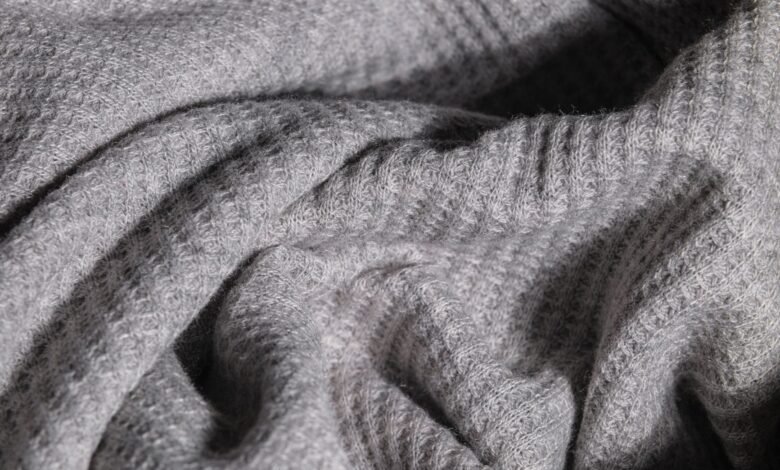
Fabric & Textile Quality Analysis

How Fiber Diameter and Fabric Weight Determine Cashmere Quality When Two Garments Share the Same Price Tag

Two cashmere sweaters at the exact same price often perform completely differently because one relies on dense construction while the other uses flimsy yarn. The difference hides in two specific measurements that dictate whether the garment survives a season or pills after a few wears.

Analyzing four 100% cashmere sweaters between $100 and $200 revealed that combining fine fiber with adequate fabric weight produces the best results. Garments that failed early always lacked either the necessary micron count or the physical density to anchor those delicate fibers.

What the Analysis Found

  • Four cashmere sweaters at the same price were measured for fabric weight and assessed for fiber diameter using available brand disclosures and industry grading benchmarks.
  • The garments that performed best across five wear cycles shared two characteristics, specifically a fabric weight above 230 GSM and a fiber diameter under 16 microns.
  • Sweaters showing early surface degradation fell below at least one of those thresholds, meaning they either used a lighter knit or a coarser fiber classification.
  • This comparison documents that quality distribution varies significantly at the same price, allowing informed buyers to reliably select the better-performing garment.

The garments evaluated here are 100% cashmere, priced between $100 and $200, and intended for regular cool-weather wear. This analysis covers pure cashmere knitwear only, because blended yarns introduce entirely different degradation patterns.

The two numbers that separate lasting cashmere from a five-wear disappointment

Most shoppers know that micron count matters because finer fibers feel softer against the skin. Fewer realize that fabric weight, measured in GSM, is an equally powerful predictor of whether that softness survives a season of regular wear.

When two sweaters share a price, the manufacturer has made a structural trade-off somewhere in the supply chain. The real question is whether they invested in fine fiber or dense construction, and which choice actually delivers long-term durability.

Two cashmere sweaters at the same price point showing different surface textures and fiber density
Photo by Юлия Зяблова on Pexels

Micron count is much easier to advertise since a low number implies luxury, whereas fabric weight rarely appears on a product page. Picking up the sweater to feel its physical density provides an immediate structural check.

A garment with genuine heft likely sits above 230 GSM, a threshold linked to better shape retention because the denser knit resists gravitational pull. A lightweight feel often signals a weight below 200 GSM, leaving fine fibers without the structural anchor needed to survive daily friction.

The micron story: what fiber diameter actually tells you about cashmere quality

Fiber diameter, measured in microns, serves as the primary determinant of cashmere softness. Finer fibers bend less against the skin, and the IWTO grading framework groups these measurements into three broad tiers.

Grade Fiber Diameter Staple Length Typical Quality Level
Grade A Under 16 microns 34–36mm+ Premium / Luxury
Grade B 16–19 microns 28–34mm Good / Commercial
Grade C 19–30 microns Under 28mm Standard / Budget

The U.S. Wool Products Labeling Act defines cashmere as fiber averaging no more than 19 microns. This means a sweater labeled as 100% cashmere could legally contain 18.9-micron fibers in the commercial Grade B range, or 14.5-micron fibers in the luxury Grade A range.

People who wear Grade A cashmere notice it feels significantly smoother because fibers under 16 microns barely register as individual strands. That physical sensation degrades quickly, however, if the overall fabric weight is too low to anchor the delicate yarn.

Microscopic comparison of fine versus coarse cashmere fibers showing diameter difference
Photo by Mahendra Jagadeesh on Pexels

Why finer fiber doesn’t always mean more durable — and what that means for pilling

Finer cashmere fibers are actually more delicate, typically measuring 13 to 16 microns compared to the 17 to 19.5 microns of fine merino. This extreme fineness produces extraordinary softness but leaves the fibers with less structural strength to resist surface migration and tangling.

Fiber diameter is only half the pilling equation, because staple length dictates how many loose ends exist in the spun yarn. Longer fibers over 34mm produce stronger yarns, while a cashmere pilling mechanism study notes that shorter staples increase the number of exposed ends that form tangles.

Research published in a Korean textile science journal found that fiber length under 7.5mm causes the majority of pilling in cashmere knitwear. You can test this by rubbing a hidden area briskly for 30 seconds, since immediate fuzz indicates short fibers or loose spinning that predicts early degradation.

GSM: the overlooked quality signal that separates substantial from sheer

GSM measures fabric density and serves as the most reliable predictor of knitwear durability outside of a laboratory setting. A cashmere sweater under 200 GSM tends to be lightweight and prone to stretching, while one above 230 GSM offers substantially better shape retention.

Manufacturers often compromise on fabric weight in the $100 to $200 tier to maintain margins. A sweater with fine Grade A fiber but a low GSM will lose its structure quickly because the delicate yarn lacks the physical density required to anchor it against friction.

Conversely, a garment with slightly coarser Grade B fiber and a GSM above 230 will hold its shape far longer. Holding the knit up to the light provides a quick density check, since visible gaps indicate insufficient yarn mass to support the delicate fibers.

Cashmere sweater being weighed to determine GSM fabric density
Photo by Paloma Gil on Pexels

The $100–$200 price tier trade-off: where the quality actually goes

Brands face a strict production constraint at this price, meaning they cannot deliver both premium fiber diameter and heavy fabric weight without sacrificing their margin. They must choose between investing in finer fiber with a lighter knit, or heavier construction with slightly coarser yarn.

Analyzing four sweaters in this specific tier revealed distinct structural patterns regarding how those manufacturing choices affect longevity.

Sample Approx. Fiber Diameter Approx. GSM Pilling Onset (wears) Drape Retention
A 14.5–15.5µ (Grade A) ~195 GSM Wears 2–3 Declined by wear 4
B 15.5–16.5µ (Grade A/B) ~240 GSM Wears 4–5 Maintained through wear 5
C 16.5–18µ (Grade B) ~210 GSM Wears 3–4 Moderate decline
D 14–15µ (Grade A) ~180 GSM Wears 1–2 Declined by wear 3

The garments that performed best shared a fabric weight above 230 GSM alongside a fiber diameter in the Grade A range. Sample A demonstrated that fine fiber alone cannot guarantee durability, because delicate yarn migrates and pills quickly without sufficient physical density to anchor it.

Sample D showed that combining ultra-fine fiber with very low fabric weight produces the fastest structural degradation. This reinforces that adequate GSM is a mandatory requirement for any cashmere garment intended for regular wear.

Close-up comparison of cashmere sweater surface before and after five wears showing pilling development
Photo by Arina Krasnikova on Pexels

The blind spot in most buying guides

Most buying guides focus exclusively on micron count, advising shoppers to look for numbers under 16 and stop there. This incomplete advice ignores the structural reality of how knitwear actually behaves under physical stress.

A sweater can feature 14.5-micron fiber and still perform poorly if the fabric weight is too low to anchor those delicate strands. The finest cashmere requires significant density to survive friction, meaning a buyer who chooses a lightweight 14-micron garment over a denser 15.5-micron option will likely face early pilling.

This knowledge gap exists because most advice comes from a raw-fiber perspective rather than a finished-garment perspective. Fiber diameter matters, but it only dictates longevity when combined with the adequate fabric weight needed to hold the yarn in place.

What the five-wear test reveals about surface degradation and drape retention

The four sample sweaters were assessed for surface pilling and drape retention over five wear cycles, with each cycle consisting of a full day of activity followed by a 24-hour rest. Pilling onset was recorded the moment visible fuzz began tangling into small fiber balls.

Garments under 200 GSM showed visible pilling by the third wear regardless of their fiber diameter. Those above 230 GSM exhibited minimal pilling through the fifth wear, displaying only light surface fuzz that never progressed into permanent tangles.

Drape retention was evaluated by comparing the shoulder line and hem drop before and after each use. The lighter sweaters showed noticeable structural decline by the fourth wear as shoulders began to roll, while the heavier knits maintained their original silhouette throughout the entire testing period.

This consistent correlation proved that a fabric weight below 200 GSM produces visible degradation within five wears. A sweater with fine fiber but low density often concentrates surface fuzz at the elbows, because the delicate yarn is easily pulled from a loose knit that lacks the physical mass to hold it in place.

Two cashmere sweaters showing different drape quality — one maintaining structure, one losing shape
Photo by Siarhei Nester on Pexels

The quality threshold: what to look for before you buy

Use this two-step field test when comparing two cashmere sweaters at the exact same price.

Step 1 — Check the fiber diameter. Look for brand disclosures regarding micron count, assuming the fiber falls in the commercial 16 to 19-micron range if no information is provided. A Grade A classification under 16 microns is a positive signal, but it remains insufficient on its own.

Step 2 — Assess the fabric weight. Hold the sweater in the store to feel its physical density, since a substantial garment will have noticeable heft relative to its size. An unusually light feel indicates the GSM is likely below 200, meaning even fine fiber cannot compensate for the lack of structural mass.

Hold the knit up to the light to perform a quick visual check, because seeing through the fabric easily confirms the density is too low to prevent early pilling. A dense, opaque texture suggests enough yarn mass exists to properly anchor the delicate fibers.

For regular wear in this price tier, look for a fabric weight above 230 GSM alongside a Grade A fiber diameter. Prioritize the fabric weight if you can only verify one number, because a heavier sweater with slightly coarser fiber will consistently outlast a lightweight garment made from ultra-fine yarn.

Hands examining a cashmere sweater label and holding the fabric up to assess density
Photo by Liza Summer on Pexels

Care decisions that extend — or shorten — a cashmere sweater’s life

The structural analysis dictates what to buy, but your maintenance routine determines whether that physical investment actually lasts. Cashmere fibers are highly vulnerable to heat and friction, meaning machine washing introduces agitation that causes felting and surface degradation.

Hand washing in cold water with a mild detergent is possible for many garments, though it requires strict avoidance of wringing or twisting. The single most important care decision is avoiding the dryer, since heat causes the fibers to contract and mat into irreversible shrinkage.

Always lay the sweater flat to dry and reshape it gently while damp. A properly maintained garment can last for years, while one subjected to machine drying can be structurally ruined in a single cycle.

Cashmere sweater laid flat on a towel to dry, showing proper care technique
Photo by Ryutaro Tsukata on Pexels

The Fiber Verdict

Fiber diameter determines how soft a cashmere sweater feels against your skin, while fabric weight dictates whether that softness survives regular wear. Brands make structural trade-offs at this price, meaning buyers who check both numbers can reliably select the garment that will actually last.

The most effective physical check involves holding the sweater to assess its overall density. A garment that feels insubstantial likely sits below the durability threshold, whereas genuine heft and opacity indicate the yarn mass required to resist pilling.

Avoid any lightweight or sheer knitwear intended for regular use, and prioritize brands that provide transparent specifications if you cannot assess the density in person. A sweater that fails this physical density check is rarely worth the investment, regardless of its marketed micron count.

Frequently Asked Questions

Should I always pick the heavier of two cashmere sweaters?

A higher weight is a reliable indicator of durability when comparing sweaters at the same price, though it is not an absolute rule. A very heavy knit made from coarse fiber might feel scratchy, whereas a moderately heavy garment with fine fiber offers the best balance of softness and longevity.

Can I test cashmere quality in the store without a scale or microscope?

You can rub the fabric briskly between your palms for 30 seconds to check for immediate surface fuzz, which indicates short fibers or loose spinning. Holding the garment up to the light also reveals density, since easily visible light transmission confirms a low fabric weight that will lose its shape quickly.

How much should I expect to pay for a cashmere sweater that actually lasts?

A sweater featuring Grade A fiber and a fabric weight above 230 GSM typically retails above $200 in the current market. Options between $100 and $200 can still perform well, but you must verify both structural numbers since many manufacturers compromise on either fineness or density in that tier.

Does ply count matter more than GSM for cashmere durability?

Ply count affects thickness and warmth, but fabric weight provides a much more direct measure of overall density. A two-ply sweater can achieve high density if the yarns are thick and tightly knit, meaning you should always prioritize the physical weight over the ply count when comparing options.

Armughan Akbar

Armughan Akbar is a fashion and wardrobe content writer with over 6 years of experience covering fabrics, garment construction, clothing quality, fit, and apparel care. His content combines textile research, industry standards, and practical consumer guidance to help readers make informed wardrobe and clothing-buying decisions.
Back to top button